In development · Seeking field feedback
You spent years training this dog.
Then you sent it in barefoot.
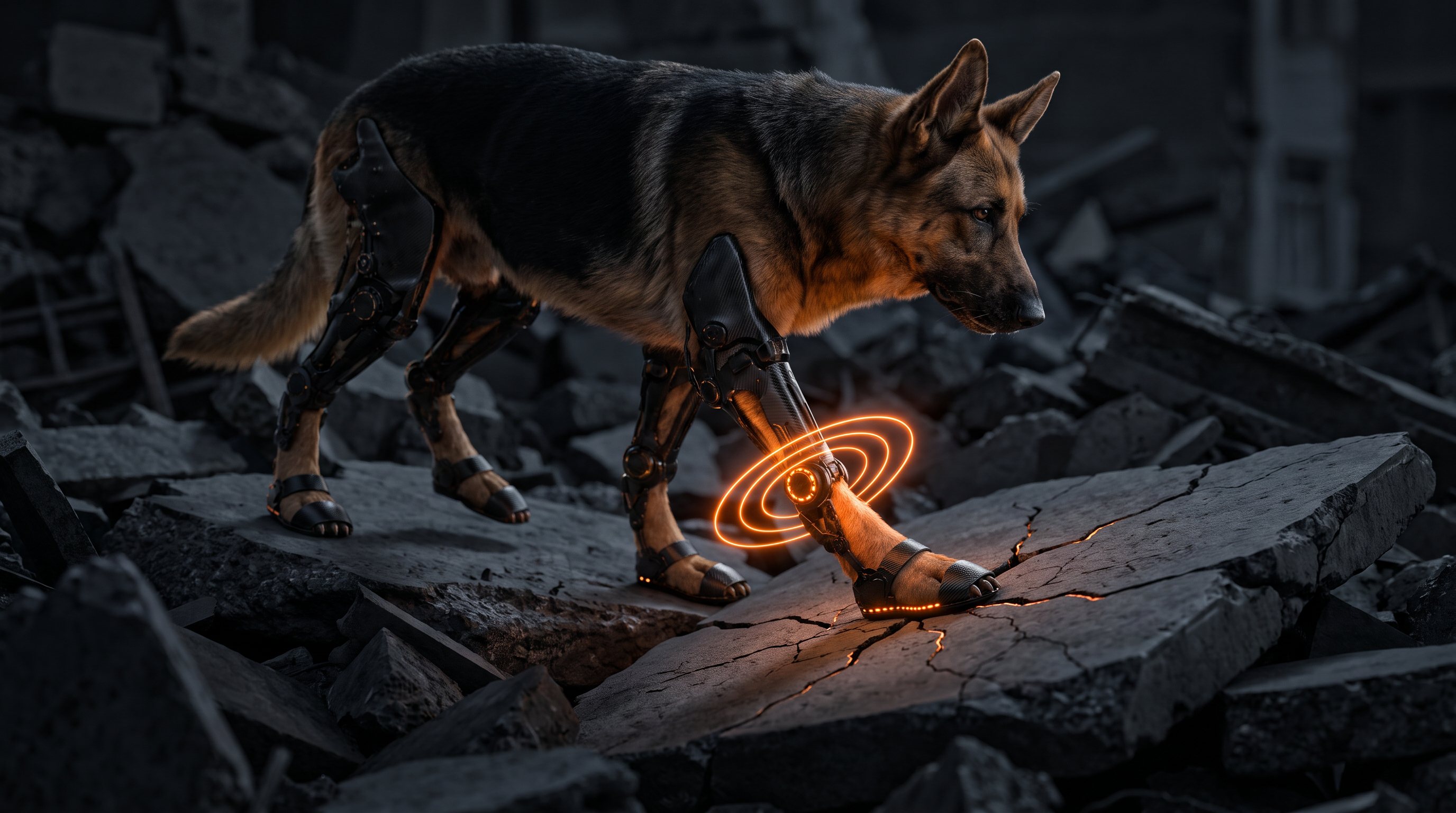
Not by choice. Conventional boots block the paw pad sensation a K9 relies on to read unstable ground, and they cover the claws it uses to grip debris — so the moment the boots go on, agility goes down. That leaves handlers with one workable option: sending the dog onto rubble, glass and rebar with nothing between skin and steel. RescuePaw is being built to resolve that paradox.
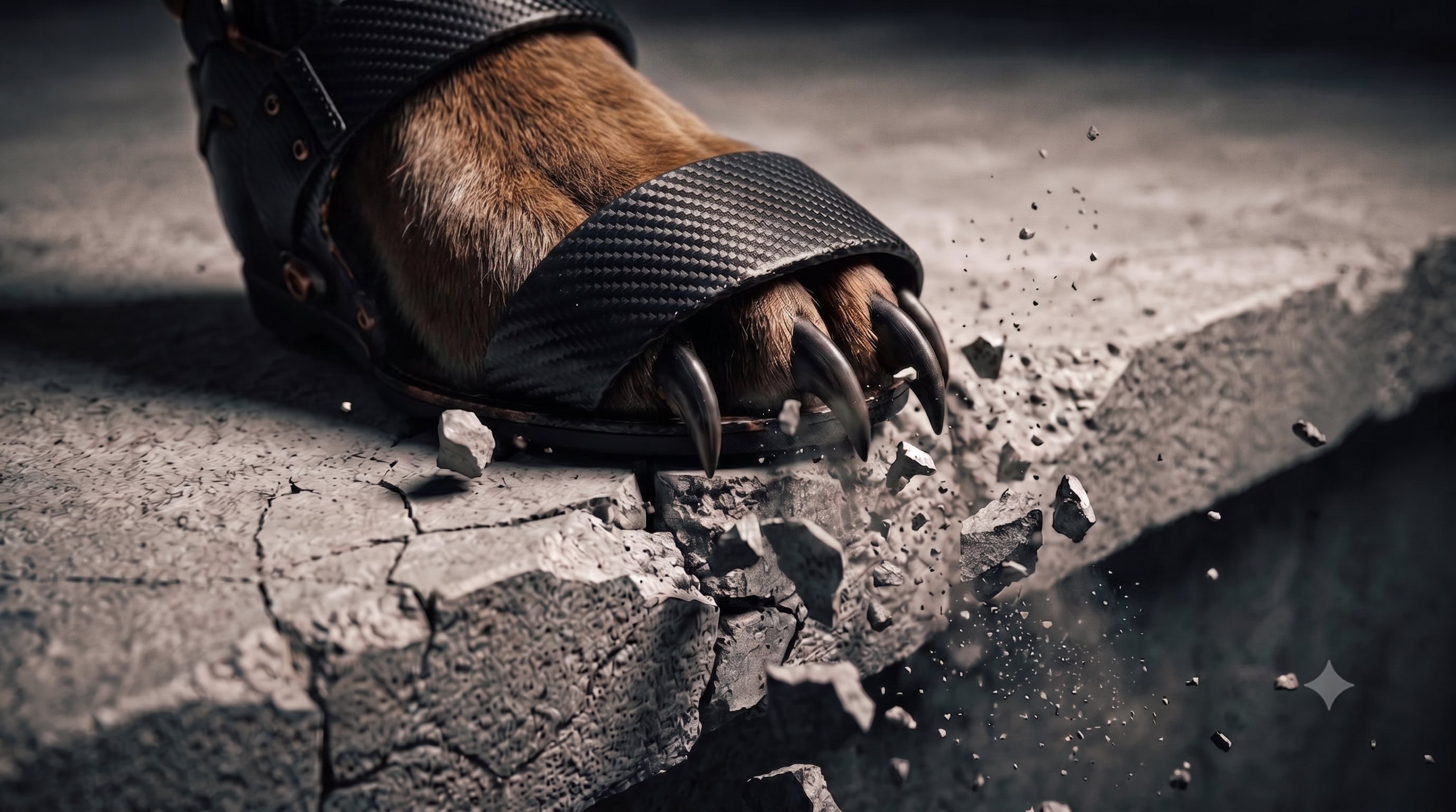
Open-toe grip
We kept the claws.
Dogs grip rubble with their claws, which is precisely why ours is the first protective boot designed to leave them free to do it.
01
The paradox handlers know too well
Boots on: senses off.
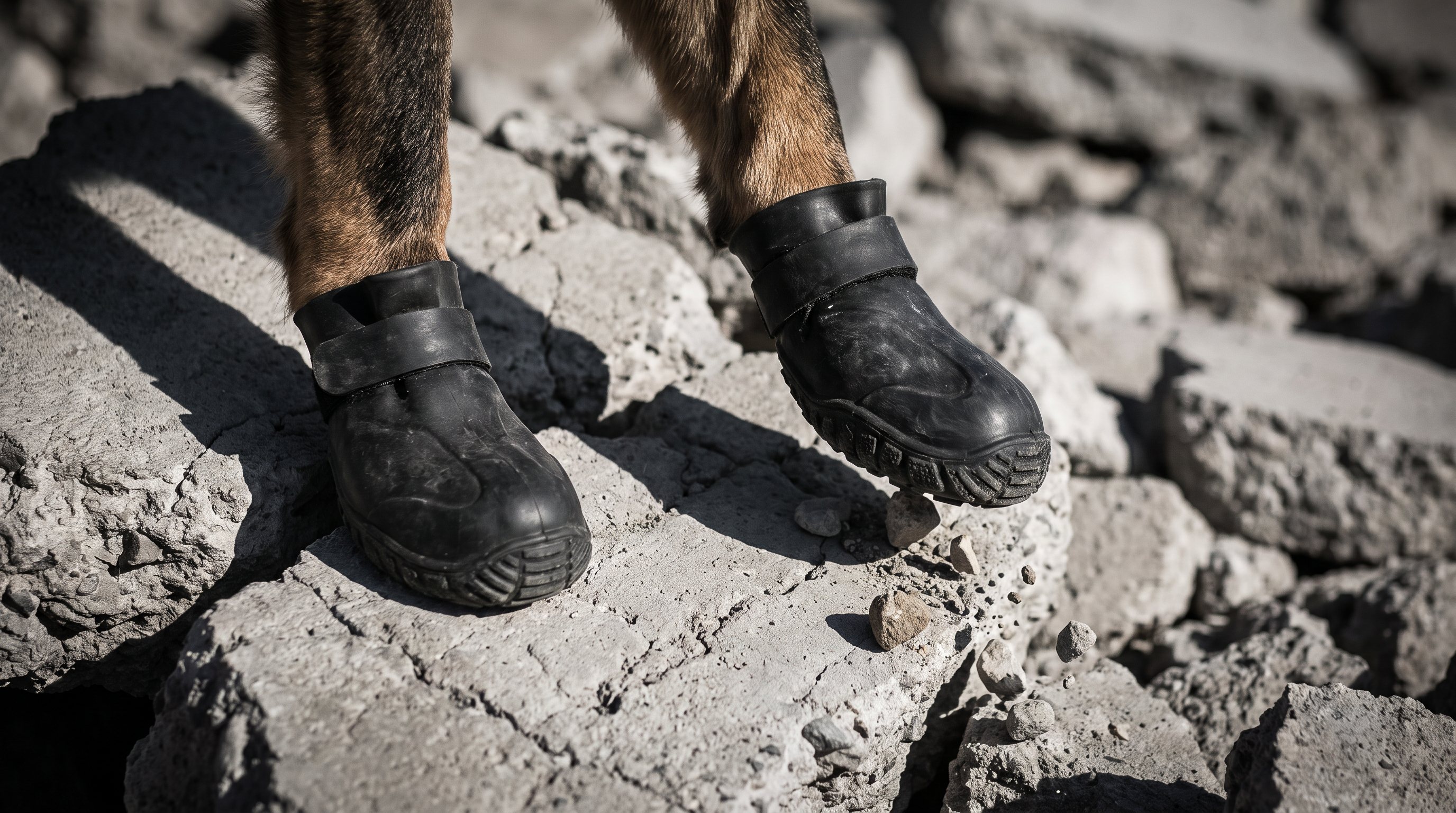
Rubber soles dull the paw pad, which is the organ a dog uses to read vibration, slope and texture, while enclosed toes cover the very claws it needs to grip rubble.
Gordon LE, Ho B. J Am Vet Med Assoc. 2020;256(3):322
Boots off: zero protection.
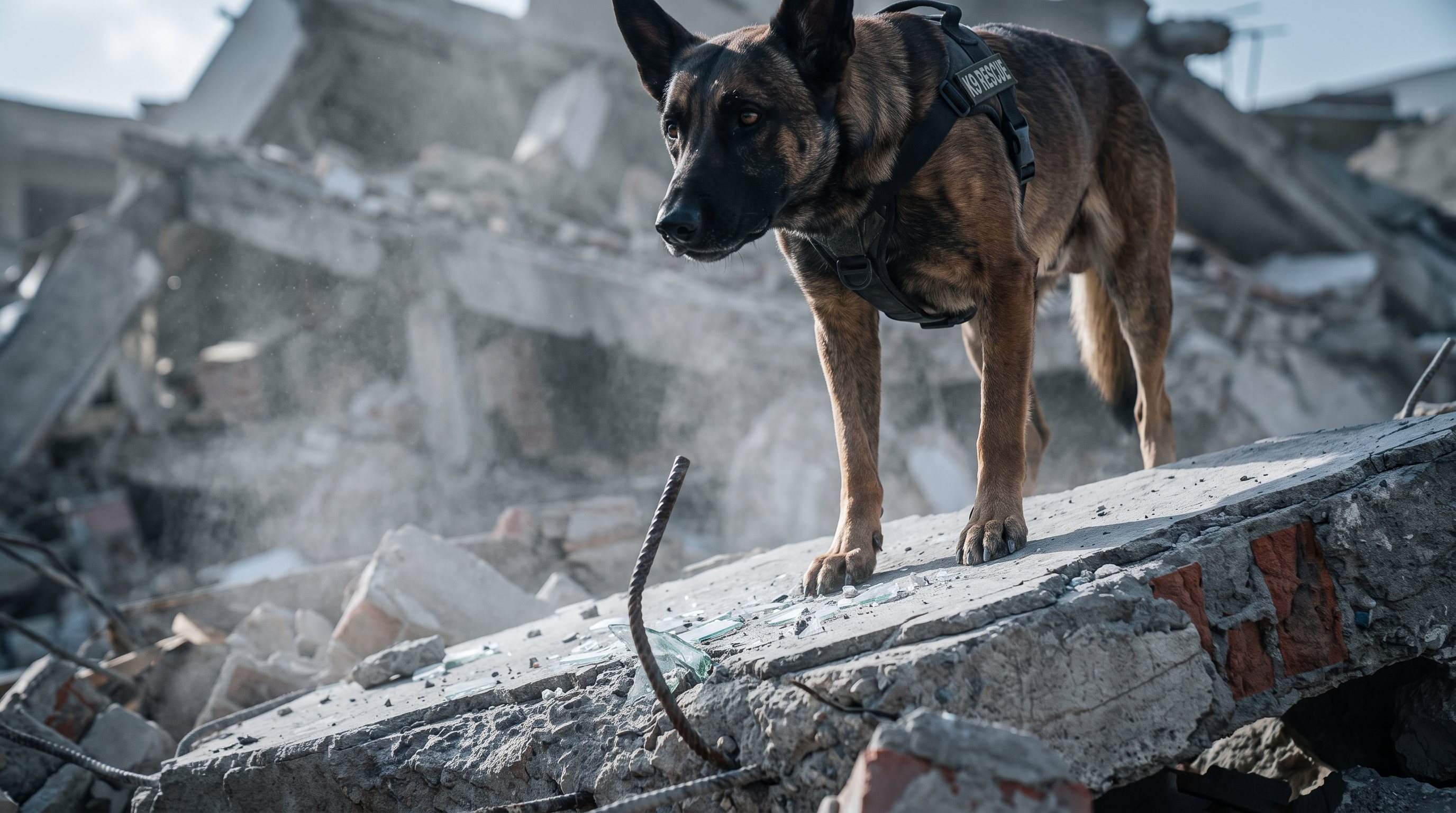
Going barefoot restores full awareness and full traction, but it leaves nothing between the paw and broken concrete, rebar or glass — so the injuries accumulate, deployment after deployment.
02
The field signal
The injuries are documented. The solution isn’t. Yet.
of training before a single K9 search team can be certified
US House Homeland Security testimony, 2017
of FEMA-certified dogs were injured or ill after the Oso landslide, where abrasions, pad wear and paw pad splits led the list
Gordon LE. JAVMA. 2015;247(8):901View paper ↗
Across deployments, wounds to the paws and lower limbs are consistently among the most reported injuries, and the tradeoff that causes them has been documented for as long as these teams have been deploying. What has not happened in all that time is a solution.
03
Our approach
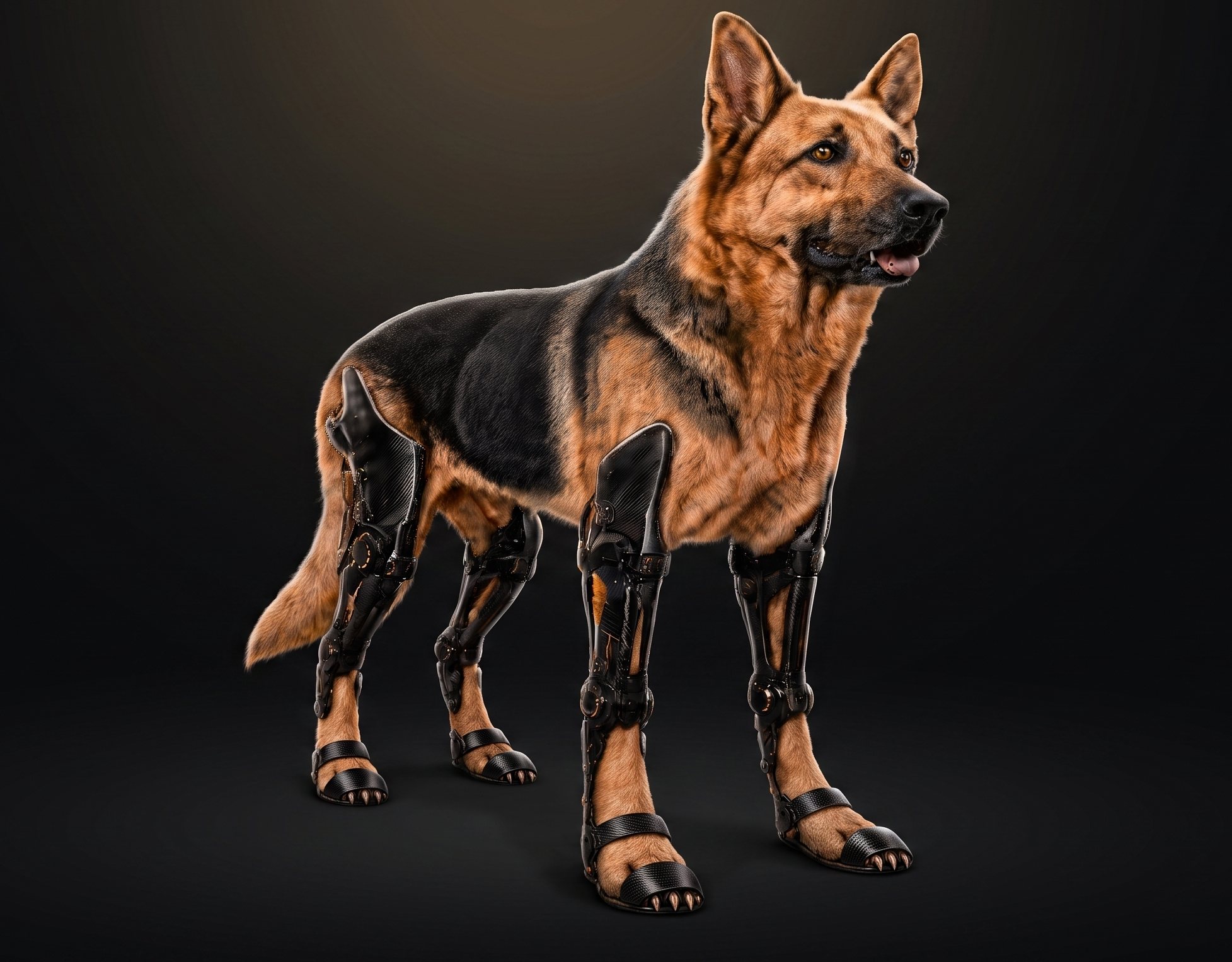
ASemi-open toe guard
A carbon shell protects the top of the toes while the front stays open, so the claws can keep working as the climbing spikes they already are.
BFull-leg carbon exoskeleton
A single continuous frame runs from the paw to the femur, shielding the lower joints without adding the bulk of a conventional harness. Bio-flexible joints and padding let the frame move with the leg rather than against it.
COn-device AI
Sensors in the sole feed an AI that lives inside the boot itself, which means the system can sense, decide and warn without a network, a cloud, or any signal at all.
DLoad path
The impact of each landing is routed along the frame so that it bypasses the knee joint and disperses into thigh muscle instead.
How it responds
It warns the paw that’s in danger.
A short vibration at the ankle carries a single meaning — get that paw off the ground — and dogs learn to read cues like this the way they learn any other command. Research on vibration-cued working dogs shows they respond to such signals reliably once the association is trained.
Sense
Sensors embedded in the sole read the pressure and motion of every footfall, catching the early signs of ground that is about to give way.
Warn
The moment the on-board AI flags unstable ground, a vibration fires at the ankle of the paw that touched it, so the warning reaches the limb that is actually at risk.
Withdraw
The dog pulls that paw back and shifts its weight away — the response it has been trained to give to that one signal, delivered through a channel that noise, distance and darkness cannot block.
success rate for vibration-cued canine commands
Byrne et al., 2017 · reviewed in Jean-Joseph & Bovet, Animals, 2026View paper ↗
The research behind it
Jean-Joseph, H., & Bovet, D. (2026). Haptic Signals as a Communication Tool Between Handlers and Dogs: Review of a New Field. Animals, 16(2), 323.
View paper ↗This review gathers the studies that have tested wearable vibration devices on working dogs. Across them, dogs reliably perceived vibration through the skin and, once trained, discriminated cues by intensity, by where on the body the signal arrived, and by its rhythm — reaching success rates above 90% in the strongest results. Existing work has concentrated on vests and harnesses worn on the torso, which is what makes the lower limb an open question, and one RescuePaw is being built to answer.
The gap
No signal. No problem.
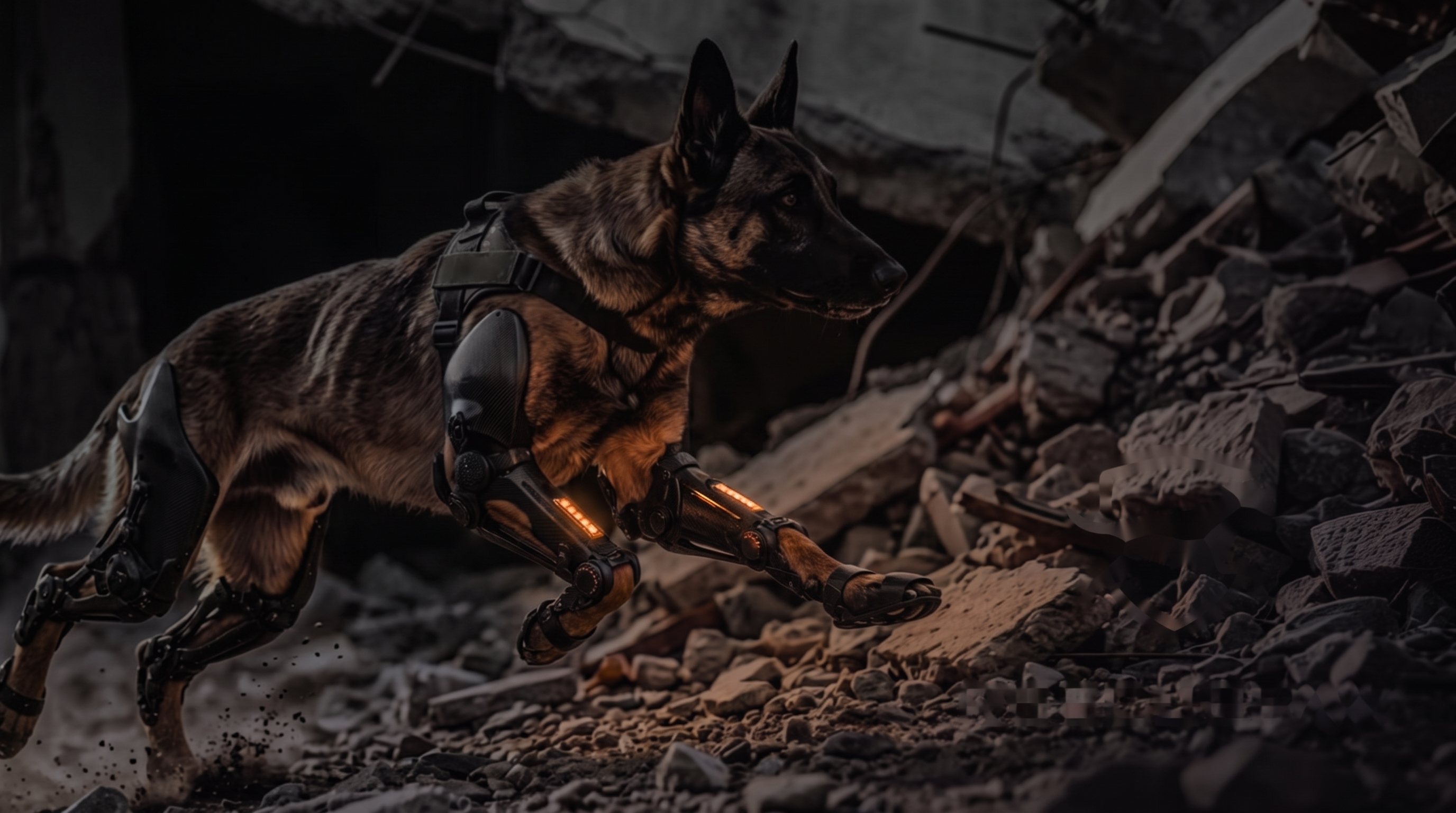
Collapsed buildings block wireless almost completely, which is why our AI senses, decides and warns entirely inside the boot.
Wearables watch the wrong place
Commercial K9 wearables cluster on the collar and torso, whereas the injuries working dogs actually sustain concentrate in the paws and lower limbs. RescuePaw mounts low and slim along the legs, which puts the protection exactly where the damage happens.
Smart gear dies where dogs work
Cloud analysis, cellular links and Wi-Fi all fail inside collapsed structures — which is exactly where rescue dogs work. That is why RescuePaw runs its entire loop, from sensing to warning, on the device itself: there is simply nothing to disconnect.
Fast enough for a footfall
A warning only helps if it arrives before the paw commits its weight, which is a far shorter window than any network round trip allows. The system is being designed so that sensing and decision both happen within a single footfall, on hardware small enough to sit inside the boot and frugal enough to run there all day.
Single-leg assembly
One limb, three systems
Every subsystem lives on the limb itself, which means nothing has to be bolted on after the fact.
01Guard
A carbon shell over the toes, open at the front so the claws stay in contact with the ground.
02Sense
A four-layer sole that reads the ground and an AI that decides what it means, both inside the boot.
03Frame
A continuous carbon structure that carries landing impact past the knee and into the thigh.
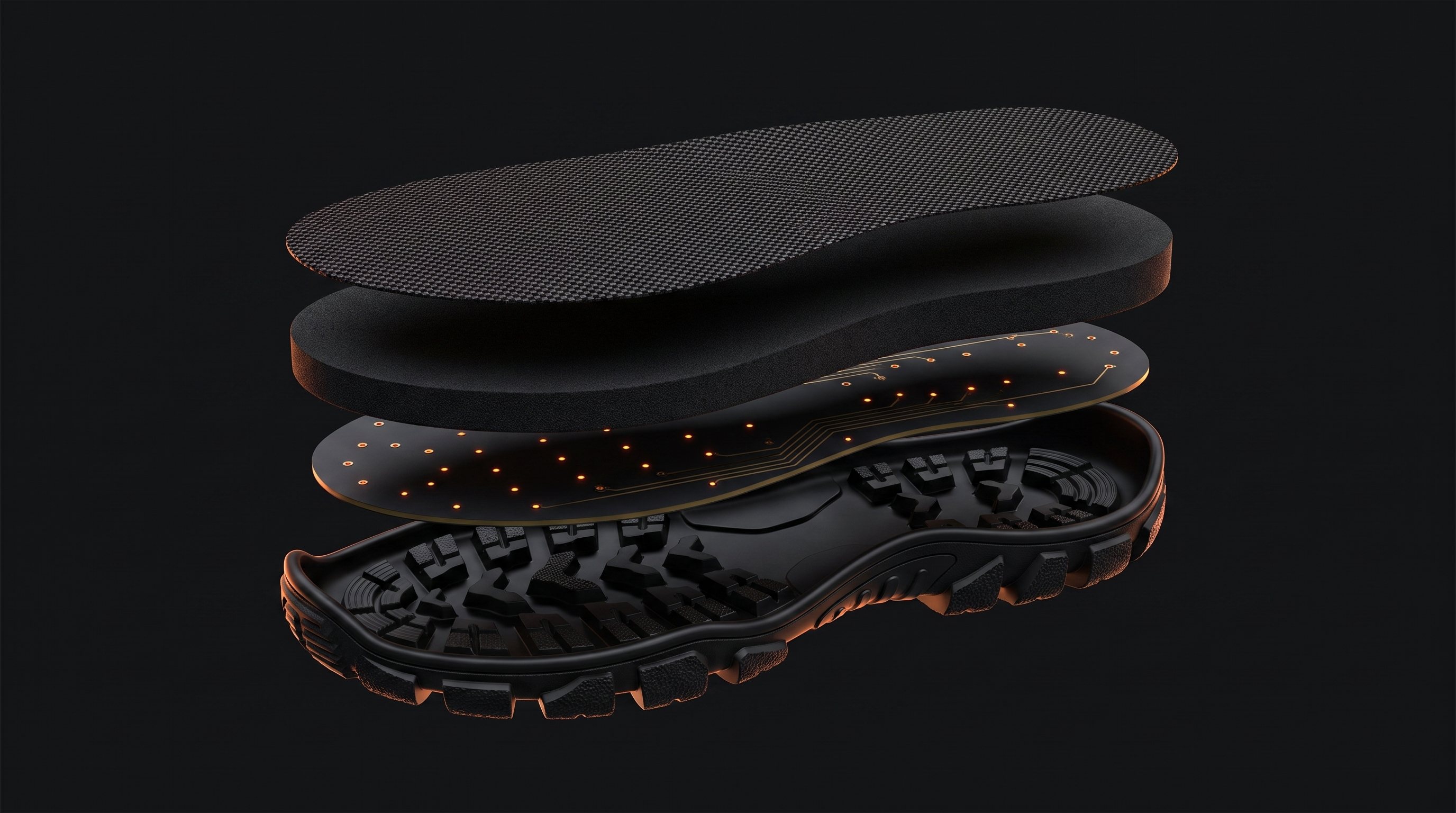
Ground interface
Sole, layer by layer
The asset
Every working year counts
of training to certify one rescue dog
invested per dog before its first deployment
people rescued per dog, per year
Korea Fire Agency / National 119 Rescue HQ data, 2020–2024 (KRW 200M training cost, approx. conversion)
Preventable paw injuries cut those careers short, which means protection pays for itself long before the dog retires.
04
We’re building this — but not without you
We have a first 3D-printed prototype of the boot, with sensor integration about to begin. Before we commit to the full system, we want to hear from the organizations that actually run K9 SAR operations. Your answers directly shape what we build next.
Field demand
Have your dogs sustained paw or lower-leg injuries on collapse or debris deployments, and if so, did the protective gear available to you meet the need?
Advisory input
Would you be open to a short call or video meeting? We can walk you through the technical concept, and we would value your view on the conditions a device has to meet before it is usable in a real operation.
Pilot and adoption
If field demand is confirmed and we build a working prototype, would your organization consider a small field trial, and — depending on how that goes — a further conversation about adoption?
60-second field check
01Have your dogs sustained paw or lower-leg injuries on collapse or debris deployments? Tell us what happened.
02Does the protective gear available to you meet the need, and where does it fall short?
03Would your organization try a field prototype?
Replies go straight to me, not a form.
Tell us what you’ve seen in the field.
sooahkang82@gmail.comSooah Kang · Partnerships Lead · TNT
Download one-pager (PDF)
Protection that thinks, on feet that feel.
Who we are
Team TNT
We are a Seoul-based student team and finalists in Korea’s 2026 ICT Smart Device National Competition, run by the Ministry of Science and ICT. We have a first printed prototype and are about to begin integrating the sensing layer. What will make this real is the field experience of the handlers and K9 organizations who do this work every day. That is why we are asking.